


Our latest Library ‘Trial of the Month’ display looks at the North Berwick witch trials which took place from 1590 to 1592.
The Witches’ Plot
In 1589, King James VI of Scotland travelled to Denmark to collect his new bride Princess Anna of Denmark after her fleet was damaged by bad weather conditions. On their return to Scotland, their fleet was again battered by storms, and one ship was sunk. Suspicions arose in the Danish court that witches had attacked the royal family by sending demons floating out to the ships in barrels, which heightened James’ concerns about the threat of witchcraft in Scotland.
Suspicions were first directed towards Gellie Duncan, a maidservant for the magistrate David Seton. She had a reputation as a community healer who could ‘help all such that were troubled with sicknesses’. David Seton was suspicious of her behaviour, which included disappearing at night and playing mysterious musical instruments. He also began to think that she ‘did not those healings by natural ways. Under torture, Gellie confessed to witchcraft, and was then officially arrested. Investigations began to find others.
One of those accused was Agnes Sampson. Sampson, also known as the ‘Wise wife of Keith’ worked in Nether Keith as a midwife, and was thought to have healing powers. She had many influential patients. In one incident, she helped the wife and daughters of a wealthy man after they were attacked by a black dog which they described as ‘supernatural’, This story made her appear as though she had the power to drive away demonic spirits.
Agnes was accused by many people including another suspected witch, who claimed that she had been summoned to meet Agnes. When she refused, the messenger told her that Agnes would ‘compel her’ to come. She was taken in for questioning and claimed she was able to heal using the power of prayer. However, any communication with spirits was enough for questioners to put her on trial.
The Trial
King James was so concerned about witchcraft becoming a threat to his authority that he conducted the trials himself alongside his inner council and a jury of local gentry.
He ordered the suspects to be brought to Edinburgh, and tried them at the palace of Holyroodhouse, his own home. This was an exceptional decision. In the sixteenth century, Scotland did not have a whole-state justice system. Administration of justice was devolved to local landowners or royal appointees. James’ decision to try the witches himself turned what had been local hearings into a national show trial, with over 70 people being accused of witchcraft between 1590 and 1592.
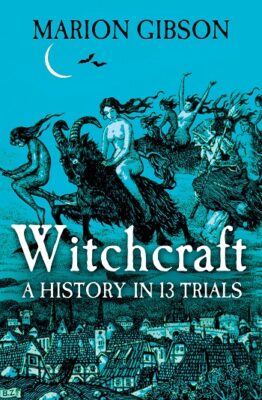
You can find out more about this trial in our latest trial of the month display. Our research has been based on the book Witchcraft: a history in thirteen trials by Marion Gibson. The Library’s copy is available to loan as part of our Griffin Collection.
Read about our previous trial of the month.
Find out more about the Griffin Collection.